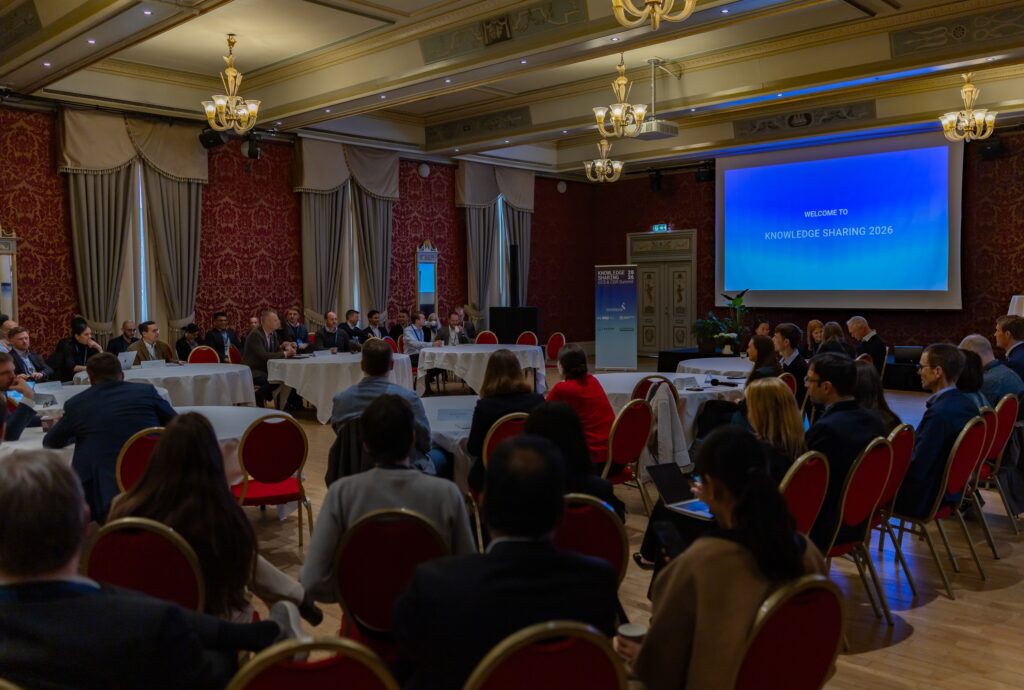
Last month, Carbon Management Europe organised its Projects Network during the Knowledge Sharing Summit in Norway. The event brought together more than 450 participants to discuss the operational and commercial realities of scaling industrial carbon management across Europe.
One message emerged clearly throughout the summit: the main challenges are no longer limited to proving carbon capture and storage (CCS) technologies. Increasingly, the focus is shifting towards integrating value chains, reducing commercial risk, securing financing, and developing scalable CO₂ transport and storage infrastructure.
Europe is moving from CCS projects to carbon management networks
From isolated projects to integrated systems
Several panels stressed that future CCS deployment will depend less on optimising individual technologies and more on integrating the full system.
Key priorities included:
- Shared transport and storage infrastructure
- Industrial clusters
- Interoperable CO₂ networks
- Harmonised regulations
- Integrated monitoring, reporting and verification (MRV) systems
- Stronger long-term commercial coordination across the value chain
Longship reflects the shift towards shared infrastructure
Kristin Myskja, Director General of the Climate, Industry, and Technology Department at the Norwegian Ministry of Energy, reflected this shift when describing Longship not simply as a Norwegian infrastructure project, but as part of a broader effort to accelerate international learning and cross-border CCS deployment.
Projects such as Longship (by Northern Lights) already illustrate this transition. What began as a Norwegian initiative is evolving into a shared CO₂ transport and storage platform serving industrial customers across Europe, including Heidelberg Materials, Yara International, Ørsted, Stockholm Exergi, and Hafslund Celsio.
The challenge is increasingly at the interfaces
Importantly, discussions suggested that the biggest deployment challenge may no longer be capture technology itself, but the interfaces between systems. Attention is increasingly shifting towards how capture plants, ports, ships, pipelines, storage sites, accounting frameworks, regulators, and commercial contracts interact across the chain.
Thomas Skadal, CEO of Gassnova, noted that operational knowledge sharing is becoming as important as technology deployment itself.
First-mover projects are exposing the realities of CCS deployment
Lessons emerging beyond conceptual studies
Some of the most valuable sessions came from first movers openly sharing the realities of project execution.
Longship experience-sharing sessions showed that many operational lessons only emerge once projects move beyond conceptual studies.
Giv Brantenberg, General Manager at Heidelberg Materials (Northern Europe), shared detailed insights into the extensive preparation required before construction could begin for Heidelberg Materials’ Brevik CCS project, including:
- More than 7,500 hours of pilot testing
- Detailed front-end engineering and design (FEED) studies
- Full 3D plant modelling
- Commissioning simulations
- Structured risk-management systems
Why FEED maturity matters
One recurring lesson concerned front end engineering design (FEED) maturity. Several project developers warned that immature FEED studies can trigger downstream impacts such as engineering rework, procurement delays, contractor disputes, commissioning complications, and significant cost escalation.
Operational integration is proving more complex than conceptual studies anticipated. Challenges span liquid CO₂ handling, utility-system interactions, instrumentation compatibility, pressure management, and operational optimisation.
Several speakers stressed that CCS facilities should not be viewed as “plug-and-play” systems. Instead, long-term optimisation and operational learning are becoming central to deployment.
The sector is learning that CCS is not hydrocarbons
Many of Europe’s first large-scale CCS projects rely heavily on expertise from offshore oil and gas. However, several speakers warned that directly transferring oil-and-gas engineering approaches into CCS can unintentionally increase complexity and costs.
Existing engineering standards may not always fit CCS
One notable example involved pressure-system design, where conservative oil-and-gas standards reportedly increased equipment costs almost tenfold compared with industrial alternatives already used safely in sectors such as cement.
This led to one of the summit’s most repeated observations: CO₂ transport and storage systems cannot be treated like conventional oil and gas operations.
The statement reflected a broader shift across the sector. Discussions repeatedly highlighted the need for more CO₂-specific engineering standards, simplified system designs, and reduced overengineering.
CO₂ specifications are strategically important
This became particularly relevant during workshops on CO₂ specifications across the value chain. Participants stressed that CO₂ specifications directly affect corrosion behaviour, transport conditions, injection performance, storage integrity, and overall system cost.
While excessive purification requirements can significantly increase costs, under-specification may create operational and storage risks.
Reducing operational risk across the value chain
One important insight from the discussions was that stringent CO₂ specifications are not primarily intended to increase capture costs, but to reduce the risk of operational failures across an emerging and highly interconnected value chain.
Carbon dioxide removals are an important part of the business model
Another major shift visible throughout the summit was the growing commercial importance of Carbon Dioxide Removals (CDR).
Only a few years ago, many CCS discussions treated removals as a future climate necessity. The summit showed how quickly that is changing. Projects involving waste-to-energy and biogenic CO₂ capture and storage (BioCCS) are increasingly integrating removals directly into financing strategies and commercial models.
Permanent removals are becoming commercially important
The Oslo CCS project, developed by Hafslund Celsio, was one of the clearest examples discussed.
The project captures around 350,000 tonnes of CO₂ annually from waste-to-energy operations, with approximately half of the CO₂ stream being biogenic. The project has already secured long-term agreements for durable carbon removals with Frontier.
These agreements are commercially significant. For some projects, durable removals are becoming central to bankability and investment decisions.
BioCCS projects are moving towards commercial scale
Stockholm Exergi also presented plans for large-scale BioCCS deployment through the BECCS Stockholm project, targeting around 800,000 tonnes of permanent carbon removals annually. Supported by public funding and growing private-sector demand for durable removals, the project has already reached final investment decision (FID) and is now under active construction.
The project also illustrates the interdependence emerging across Europe’s carbon management value chain: Stockholm Exergi’s agreement with Northern Lights was among the key commercial contracts supporting the expansion toward Phase 2 of the Longship project.
The CDR market remains immature
At the same time, discussions highlighted that the carbon-removal market remains immature:
- Pricing mechanisms remain uncertain,
- Methodologies continue evolving,
- MRV systems are still being harmonised,
- Uncertainty persists around the relationship between voluntary and future compliance markets.
Several speakers also noted that buyers are performing increasingly rigorous due diligence on permanence, additionality, traceability, sustainability, and single counting.
As discussions involving Eve Tamme, Chair of Carbon Management Europe, highlighted, the next few years will likely determine whether Europe can successfully integrate durable removals into broader industrial decarbonisation frameworks.
Storage scale-up is becoming one of Europe’s defining challenges
CO₂ storage emerged as a central theme throughout the summit, particularly during discussions on scaling operational storage capacity across Europe.
Storage resources and storage capacity are not the same
One of the clearest messages was that theoretical storage resources and operational storage capacity are not the same thing.
During storage workshops, Sidsel Lindsø, CEO of Ecteras, stressed that large geological resource estimates often overlook practical constraints such as injectivity, pressure interference, well requirements, monitoring obligations, and long-term reservoir behaviour.
Early projects are shaping operational learning
Participants also emphasised that storage development requires phased learning. Pilot and early commercial projects are essential for understanding reservoir response, pressure behaviour, monitoring optimisation, and operational flexibility.
Sarah Gasda, Research Director at NORCE Energy, highlighted the importance of continuously updating models using operational injection data rather than relying solely on pre-development simulations.
Discussions also explored emerging storage concepts beyond saline aquifers, including mafic and ultramafic formations, presented by Rachael Moore, Carbstrat. Several participants stressed that future regulatory systems should remain flexible and technology-neutral to accommodate evolving storage approaches.
Monitoring approaches are still evolving
Monitoring strategies received significant attention as well. Several experts noted that early projects tend to over-monitor to build confidence, while future commercial systems will likely move towards more targeted and cost-optimised approaches.
A recurring takeaway from the storage discussions was that Europe is still in the early stages of understanding what large-scale operational CO₂ storage deployment will require.
CO₂ transport is evolving into strategic infrastructure
Shipping is becoming increasingly important because it allows industrial producers without pipeline access to connect to shared storage infrastructure.
Shipping is enabling early deployment
Northern Lights highlighted advances in liquid CO₂ shipping, including larger vessels, improved energy efficiency, and the development of larger-scale loading infrastructure
Several speakers stressed that shipping’s flexibility could accelerate early CCS deployment by allowing emitters to connect to storage infrastructure before large-scale pipeline networks are fully developed.
Coordination across transport systems remains essential
At the same time, participants noted that transport optimisation still depends on strong value-chain coordination, including harmonised CO₂ specifications, interoperable networks, temporary storage capacity, and integration between shipping and pipeline systems.
New regional hubs are emerging across Europe
The summit also highlighted growing momentum beyond Norway, with emerging transport and storage hubs across Denmark, Sweden, the Netherlands, and Greece.
The broader message was clear: transport infrastructure is becoming one of the key enablers of a European carbon management market.
Financing and insurance remain major barriers
Despite major technical progress, financing and insurance frameworks are struggling to keep pace with CCS deployment. Technical maturity is faster than commercial and financial maturity.
Panels involving Chris Thackeray, Global CCS Lead at Baringa, stressed the importance of long-term policy predictability and stable revenue structures to attract large-scale private investment.
Insurance workshops focused on challenges such as cross-chain risk allocation, leakage liability, off-spec CO₂, long-term storage performance, downtime, and carbon-credit loss.
Experts explained that while insurers are relatively comfortable assessing individual assets such as compressors, ships, or pipelines, ensuring an integrated CCS chain remains far more complex because risks propagate across multiple actors and infrastructures.
Discussions also highlighted growing concern around carbon-removal credits. As projects increasingly depend on durable removals as a revenue stream, operational disruptions or leakage events could create significant financial exposure.
Collectively, the discussions demonstrated that commercial scale-up will depend as much on financial integration as on technical progress
The next phase of CCS deployment will depend on simplification and standardisation
One of the clearest messages emerging from the summit was that future CCS deployment must become simpler, faster, and more repeatable.
Many first-generation projects involved highly customised engineering and complex interfaces. However, several speakers stressed that large-scale deployment would require greater standardisation, modularisation, faster permitting, harmonised CO₂ specifications, simplified contracting approaches, and more operationally optimised systems.
The summit ultimately showed that Europe is no longer simply trying to prove that CCS works. It is beginning to learn how to industrialise it.